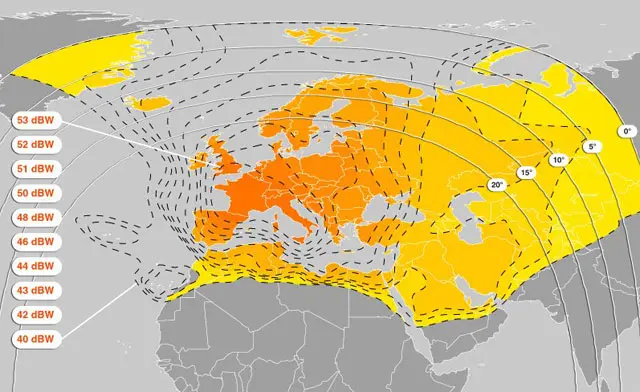
The frequency of Canale 122 channel across all satellites

Canale 122 is a general entertainment and information TV channel from Italy, offering a varied mix of local and national content.
As part of the Italian regional broadcasting scene, it delivers news, cultural programs, entertainment shows, documentaries, and community-focused programming tailored to Italian audiences, alongside a special emphasis on daily life, events, and topics related to audience across the country.
For satellite TV audience in Italy, Europe, and among the Italian diaspora, knowing the correct satellite frequencies and technical parameters is essential for uninterrupted signal. This comprehensive guide provides detailed information on Canale 122’s satellite transmission across accessible satellites, including tuning parameters, access, and practical guidance for audience.
Satellite Coverage of Canale 122
Canale 122 is primarily broadcast via the Eutelsat 9B satellite at 9.0° East, which provides powerful and optimized reach over the entire Italian territory. This orbital position ensures excellent signal strength across urban centers, rural regions, and southern regions of Italy, making it an ideal platform for regional and local broadcasters.
The satellite reach is specifically designed to deliver reliable high-quality signal throughout Italy and parts of neighboring countries. Satellite transmission plays a vital role in reaching audience in remote or mountainous regions where terrestrial digital TV (DTT) reach may be weak or unavailable.
Technical Parameters for Canale 122
To access Canale 122 via satellite, audience must configure their receivers alongside precise technical parameters. The main and most steady transmission is on Eutelsat 9B (9.0° East):
- Satellite Position: 9.0° East (Eutelsat 9B)
- Frequency: 12111 MHz
- Polarization: Vertical (V)
- Symbol Rate: 31400 kS/s (or as per current multistream settings)
- Modulation: DVB-S2 16APSK Multistream (Stream 3)
- error correction: 2/3 or according to the active stream
These parameters are critical for locking onto the correct transponder. Because it uses multistream technology, some receivers require manual choice of the specific stream (usually Stream 3). Entering incorrect values can lead to no signal, pixelation, or failure to decode the channel. Ensure your decoder fully supports DVB-S2, 16APSK, and multistream functionality for optimal signal.
Note on other satellites: Currently, Canale 122 is mainly accessible on Eutelsat 9B. It does not have widespread transmissions on major satellites like Hotbird 13°E or Astra. Viewers should verify the recent parameters, as frequencies can sometimes change.
Access and Encryption
Canale 122 is transmitted in Clear (FTA – Free To Air) on its primary transponder. No subscription, smart card, or decryption module is required. This makes the channel freely accessible to anyone alongside a properly aligned satellite dish pointed at 9.0° East and a compatible DVB-S2 decoder.
It often shares the transponder alongside other Italian local and regional channels, allowing audience to discover additional content from the same frequency scan.
Programming and Content Focus
Canale 122 offers a balanced lineup that appeals to a broad Italian audience:
- Local and national news updates
- Entertainment programs, talk shows, and variety content
- Cultural and lifestyle documentaries
- Community events and regional highlights
- General interest programming covering daily life, health, and society
The channel serves as an accessible platform for audience seeking Italian-language content alongside a friendly, community-oriented approach.
Importance of Satellite signal
Satellite signal is particularly valuable for Canale 122 audience in Italy because:
- It provides reliable reach in regions alongside limited or no DTT signal.
- It allows Italian communities living abroad in Europe to stay connected to home programming.
- It delivers steady image clarity independent of local internet or cable infrastructure.
For households in rural or hilly regions of Italy, satellite remains one of the most dependable ways to enjoy Canale 122 and similar local channels.
Challenges in Satellite signal
Receiving Canale 122 via satellite may involve a few technical considerations:
- Dish Alignment: Precise pointing toward 9.0° East is essential. Even minor misalignment can weaken the signal significantly.
- Multistream Compatibility: Advanced receivers are needed to handle the multistream transponder and select the correct stream.
- Receiver Settings: Support for DVB-S2 16APSK is mandatory for clear decoding.
- Frequency Updates: Satellite parameters may change from time to time. Regularly checking reliable sources such as LyngSat or KingOfSat is recommended.
- Signal Strength: In fringe signal regions, a larger dish size (80 cm or more) may improve stability.
By addressing these points, audience can achieve consistent and high-quality signal.
Future of Canale 122 Satellite Broadcasting
Like many regional Italian channels, Canale 122 continues to evolve alongside the broadcasting industry:
- Possible upgrades to full HD quality for improved viewer experience.
- Increased integration alongside online streaming platforms while maintaining satellite presence.
- Potential expansion or optimization of satellite beams for better reach.
- Adoption of more efficient transmission technologies to enhance picture and sound quality.
Satellite broadcasting will likely remain important for local channels, especially in reaching audiences in regions alongside unstable broadband connections.
Practical Tips for Viewers
To enjoy the best possible Canale 122 satellite experience:
- Align your satellite dish accurately to 9.0° East using a professional satellite meter or reliable app.
- Use a modern DVB-S2 decoder that supports 16APSK and multistream.
- Perform a manual transponder scan if the channel does not appear automatically.
- Keep your decoder firmware and channel list updated.
- Check signal quality (C/N ratio) regularly, especially after storms or dish movement.
- For audience in Italy, a 60–80 cm dish is usually sufficient; larger dishes help in distant or difficult locations.